Using it · safety
The whole manual is three lines.
No screwdriver, no wires. The magnets pull the light into place, and the power connects at the same moment.
 1
An electrician wires it once. There’s nothing on the ceiling side that can break.
 2
As soon as you bring it near the mount, four pairs of magnets pull it in.
 3
Power connects the moment it locks (220 V in Korea). Flip the switch and it’s on.
Safety comes first
Not falling isn’t a feature. It’s the starting point.
If something on your ceiling falls even once, that’s it. So I designed the part that keeps it from falling before I designed the part that holds it on. We only ship what passes every test below.
Four magnet pairs, 214 N of hold (design value). That’s more than seven times a 3 kg light module. The contacts close as it seats.
If the hold ever weakens, the module drops 3 mm onto lips in the mount. It only comes off if someone turns it and pulls. The springy parts are in the replaceable module; the lips are in the permanent mount.
The ceiling side is just a connector and lips. The driver and power parts are all in the light module, so if something fails, you swap the module. The live contacts are recessed, like a kettle base, so fingers can’t reach them.
Tests it has to pass before launch
These are design targets for our fourth design revision. We’ll replace them with measured values from the November 2026 prototype tests and from KC certification in 2027. Partner lights get certified against the same tests.
| Item | Target | Basis |
|---|---|---|
| Lip static load | 4× module weight for 1 hour | Based on the KC/IEC 60598-1 suspension test |
| Magnetic hold | ≥ 214 N (7× a 3 kg module) | Design value, to be measured on the prototype |
| Release | Turn ~20°, then 4–5 kgf to pull it off | Any adult can do it one-handed; it won’t come off without the turn |
| Contact temperature rise | ≤ 45 K at rated current, continuous | Based on the KC/IEC 60598-1 thermal test |
| On/off cycles | Hold and contact resistance unchanged after 10,000 cycles | Once a day for 27 years |
| Shock protection | Fingers can’t reach the live contacts with no light attached | Ground connects first, disconnects last |
Even if the magnets let go, it doesn't fall.
The power connector works like the base of a cordless kettle, so it connects at any angle. We don’t put any electronics on the ceiling side, so there’s nothing up there to fail.
If the magnets let go, a safety ring on the light catches on lips in the mount. So you can change it by yourself, on a ladder, without worrying.
Two Korean patent applications and a PCT application are filed. We launch in Korea in 2027, after KC safety certification.
If you want to know why
To change it, just give it a turn.
Switch it off and turn the light a little. The magnets let go. Catch it with both hands, push the new one up, done. Tap a step and the cut-away view changes.
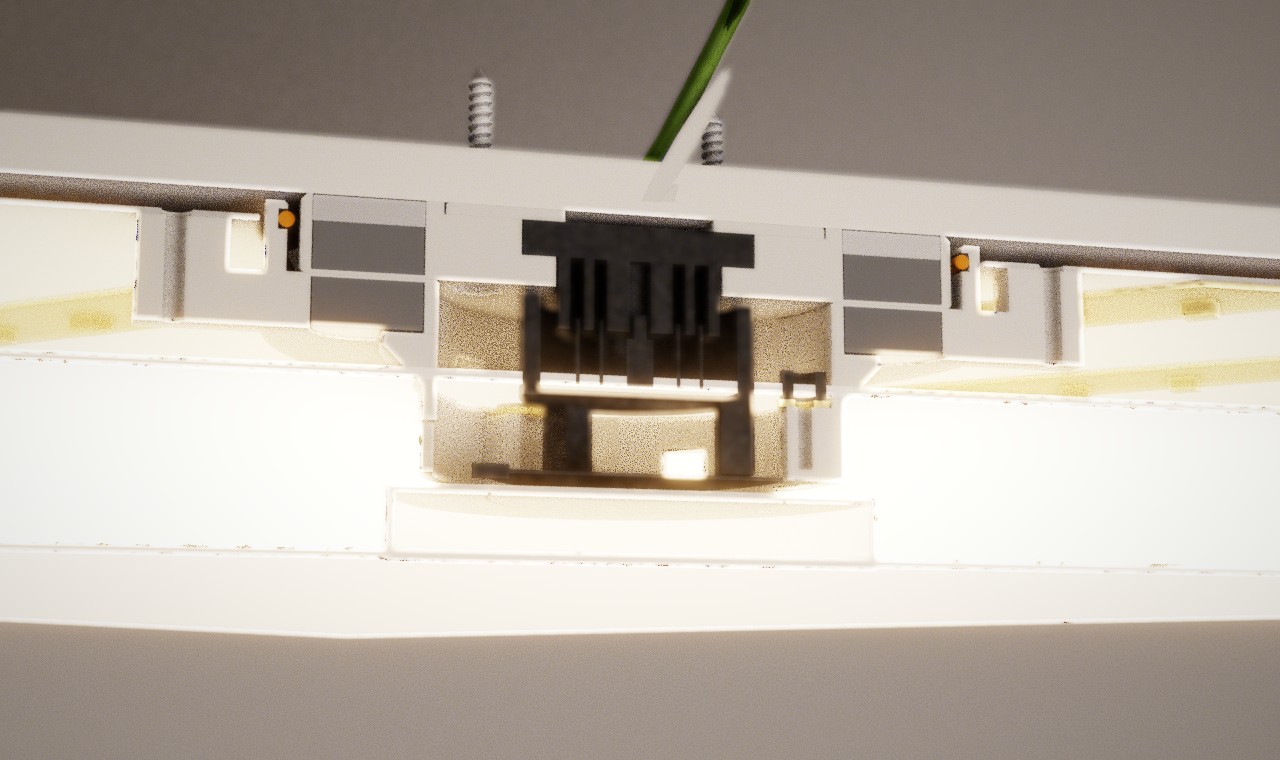
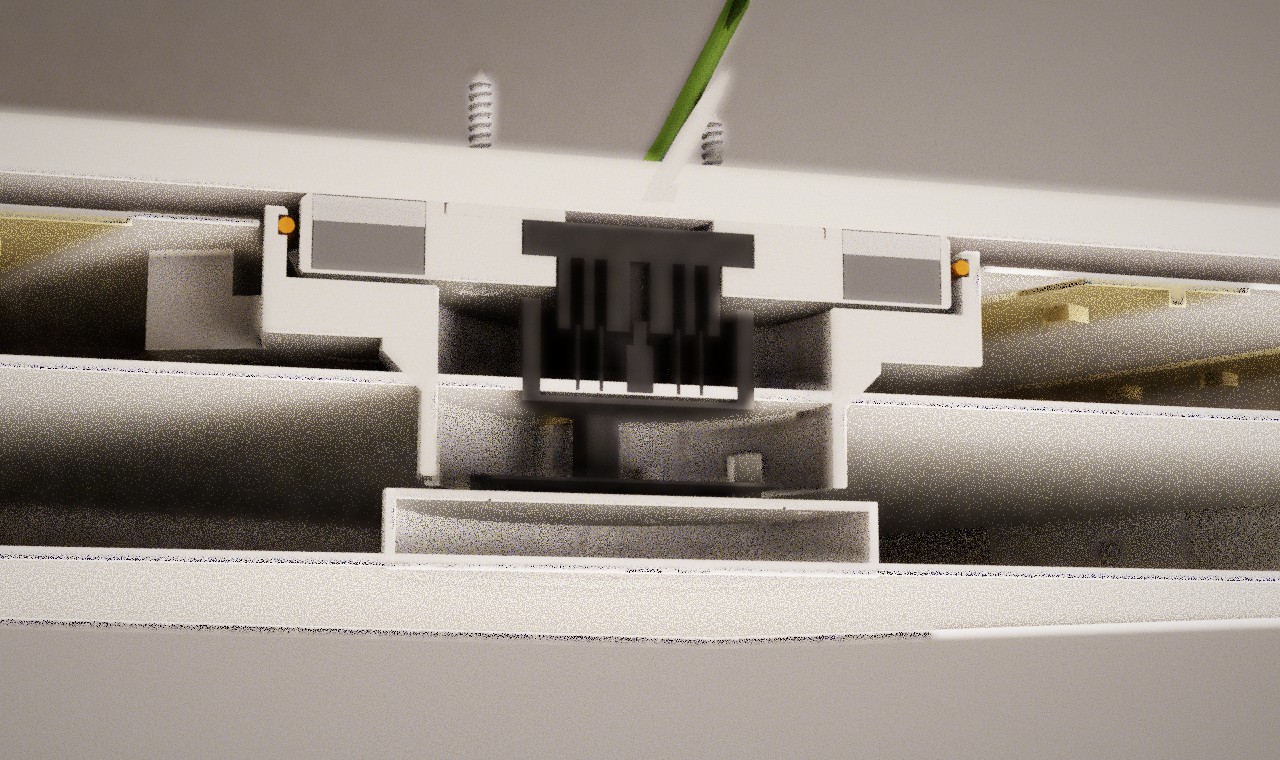
 Magnet Ø18×8Magnet Ø18×8Magnet Ø18×8Power couplerPower couplerPower couplerSafety O‑ring · lipSafety O‑ring · lipSafety O‑ring · lip
How it compares
How ceiling lights got here.
Ceiling lights have been moving toward fewer tools and less wiring. Power that connects on contact, a backup that keeps it from falling, and parts you keep reusing: that’s where Magnect comes in.
| Gen 1 Standard LED fixture | Gen 2 Swappable module | Gen 3 Rechargeable | Gen 4 Plug-in or latch mounts | Magnect | |
|---|---|---|---|---|---|
| Tools to replace | Yes | Yes (open the cover) | None | None | None |
| Ceiling wiring | Every time | When the driver dies | None (no wall power) | Once | Once |
| Power | Hard-wired | Hard-wired | Battery; limited brightness and runtime | Connects on attach | Connects on attach (220 V) |
| Fall protection | Screwed in | Screwed in | Sits in a holder | Latch; needs a release | Magnets + lip; turn to release |
| Parts you keep | None (whole unit gets trashed) | Housing | — | Mount | Mount and wiring (no electronics overhead) |
| Who changes it | Electrician | Electrician or a handy person | Anyone | Anyone | Anyone, in seconds |
Gen 4 groups detachable products already sold in other countries by how they work. Individual brands differ.