For businesses
Put the mounts in first,
and changing lights becomes something residents just do.
Before it’s a consumer product, Magnect is a power standard that goes into buildings. Pick a type of site to see where it pays off.
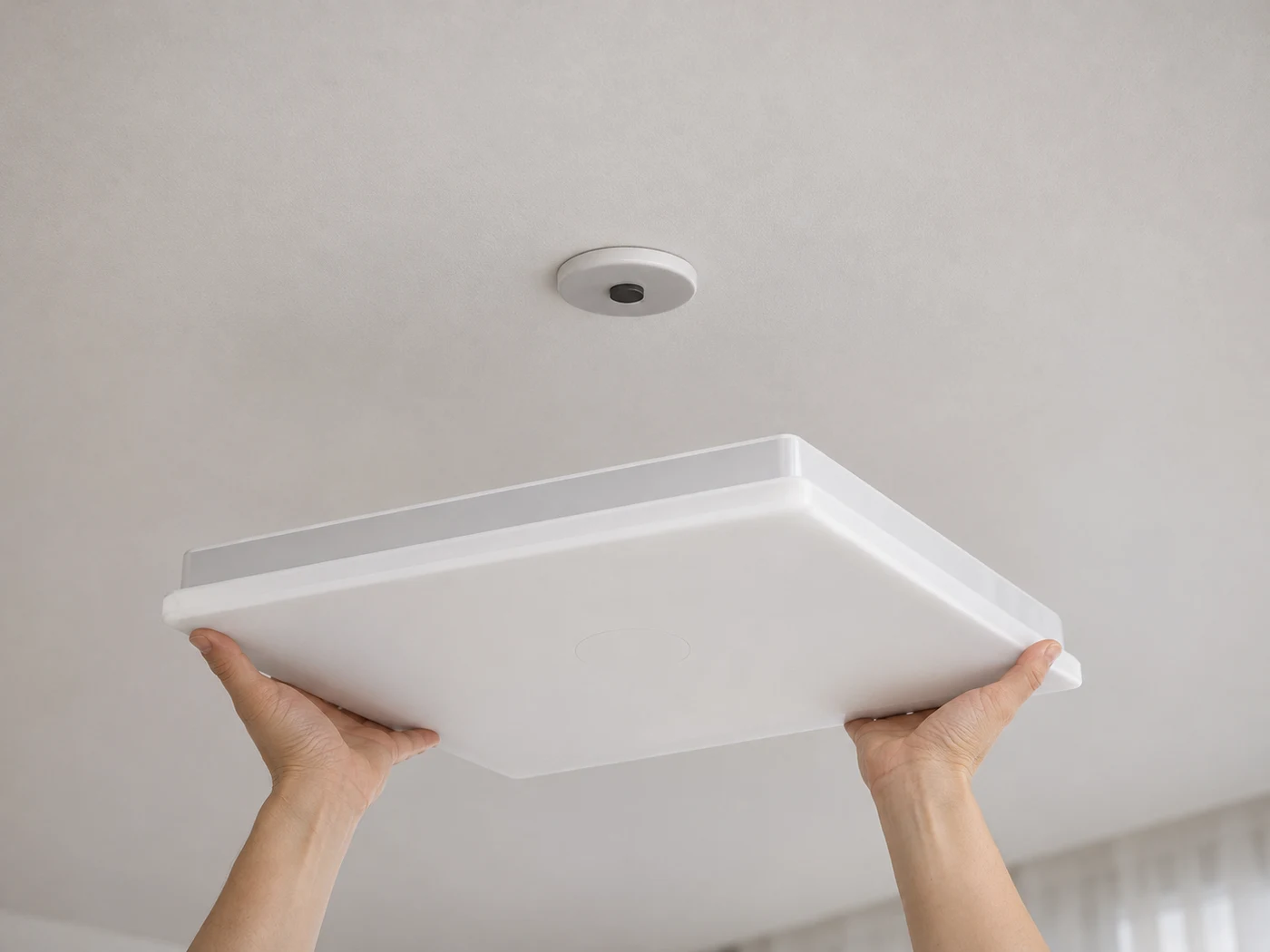
Public & rental housing
A building where a dead light isn’t a service ticket
Lots of units, lots of older people and people living alone. Today a dead light means calling the office, waiting for a contractor, and living in the dark until they show up.
- Residents swap it themselves in seconds, with no service call and no fee
- Fewer lighting complaints and maintenance visits
- No wiring on ladders, so fewer accidents
- Nobody lives with a broken light because fixing it is too much hassle
Builders · architects · developers
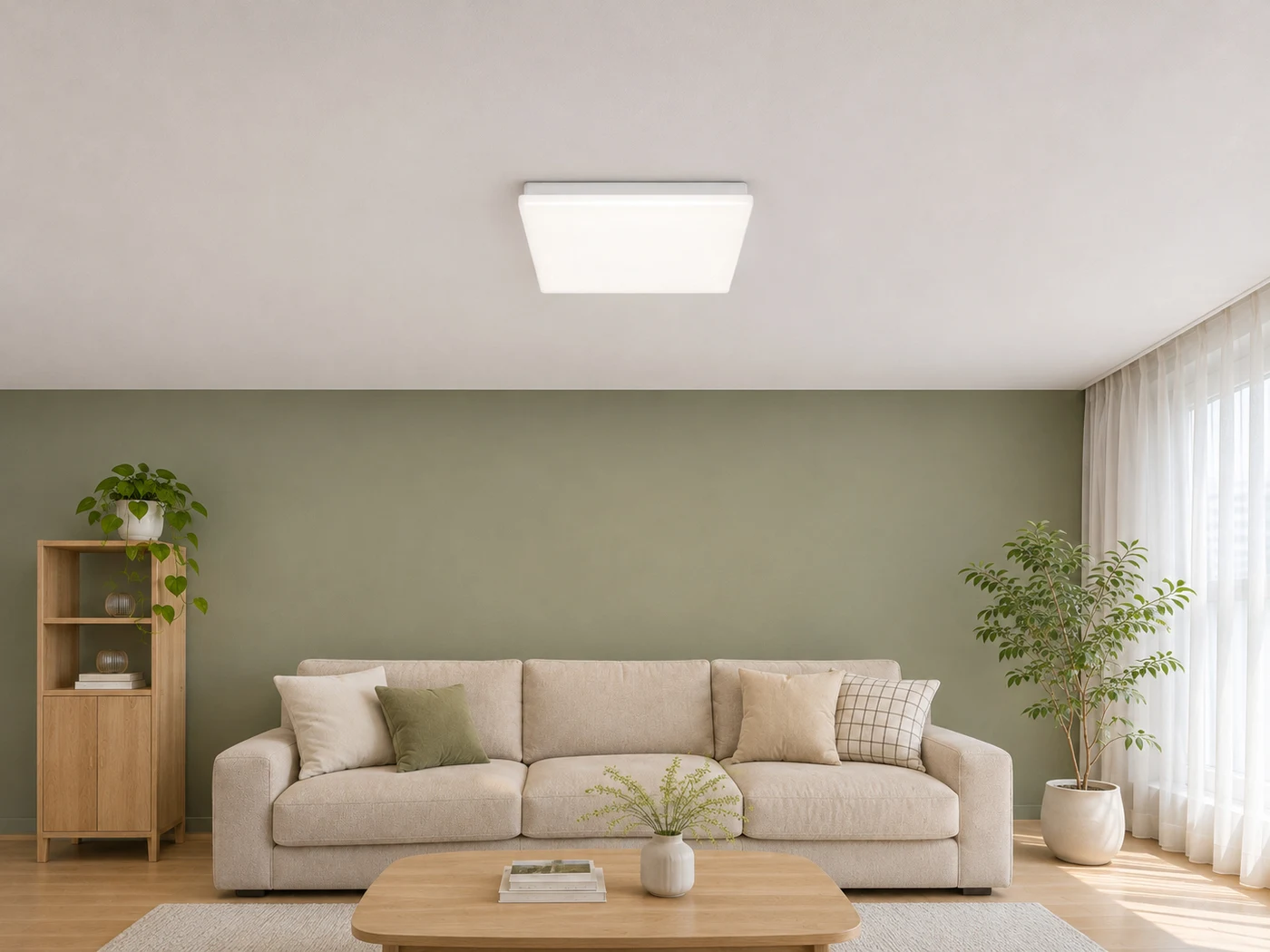
Take lighting off the punch list
Lighting is one of the most common punch-list items and change requests after move-in, and residents want to pick their own anyway. Those two things clash.
- Fewer lighting callbacks after move-in
- Spec one mount; residents pick from the certified lineup
- The glowing mark becomes a premium detail for the building
- Add ceiling fans, bath fans and sensors to the same mount later
Hotels · dorms · clinics
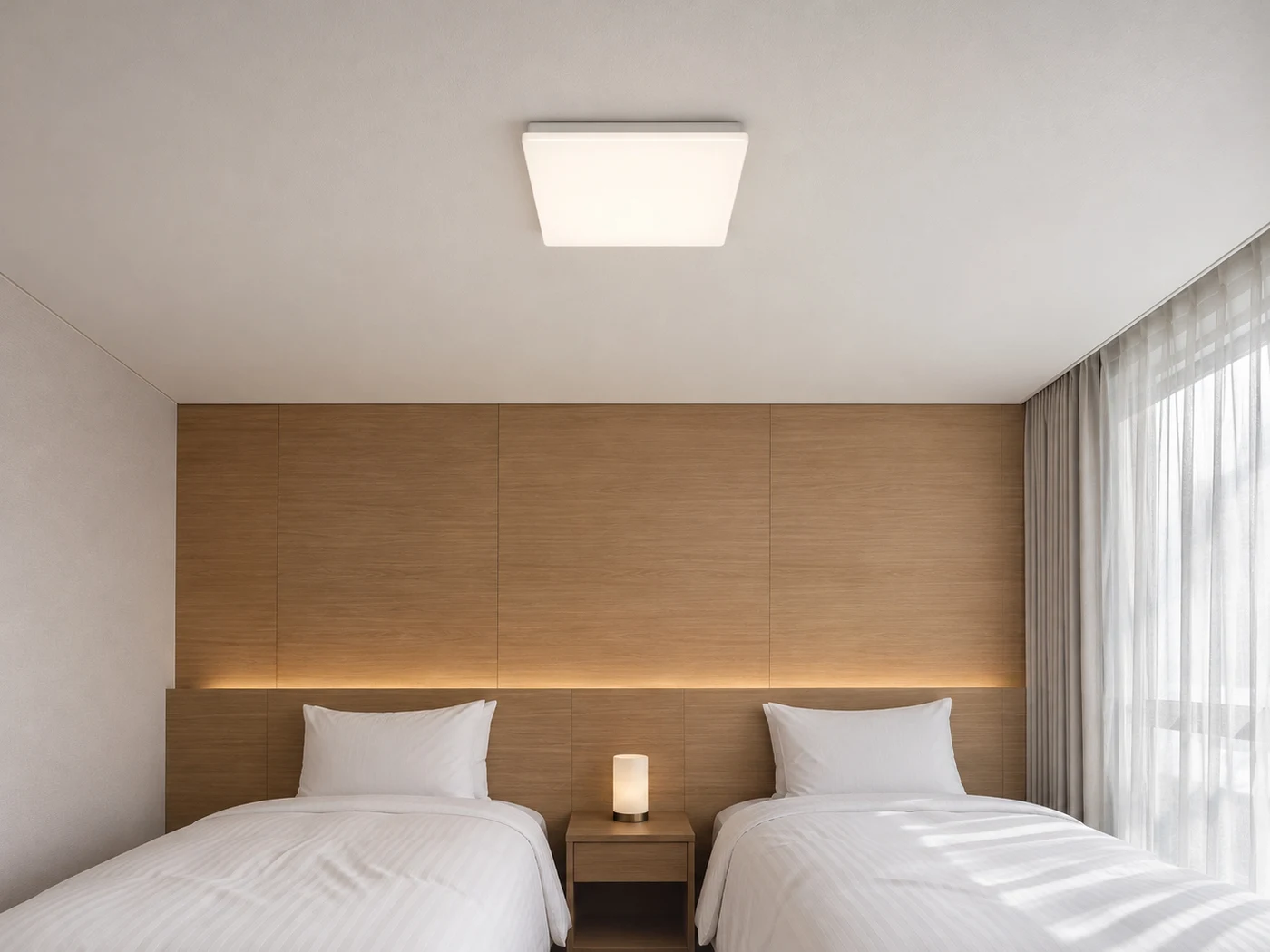
Time saved, room after room
More rooms means more replacements. Staff climb ladders or call an electrician, and the room stays out of service in the meantime.
- Seconds per swap, by any staff member; the room barely goes offline
- Keep a few spare lights and any room is fixed on the spot
- We take used lights back for recycling
- Change the look at renovation time without touching the ceiling
Factories · offices · cleanrooms
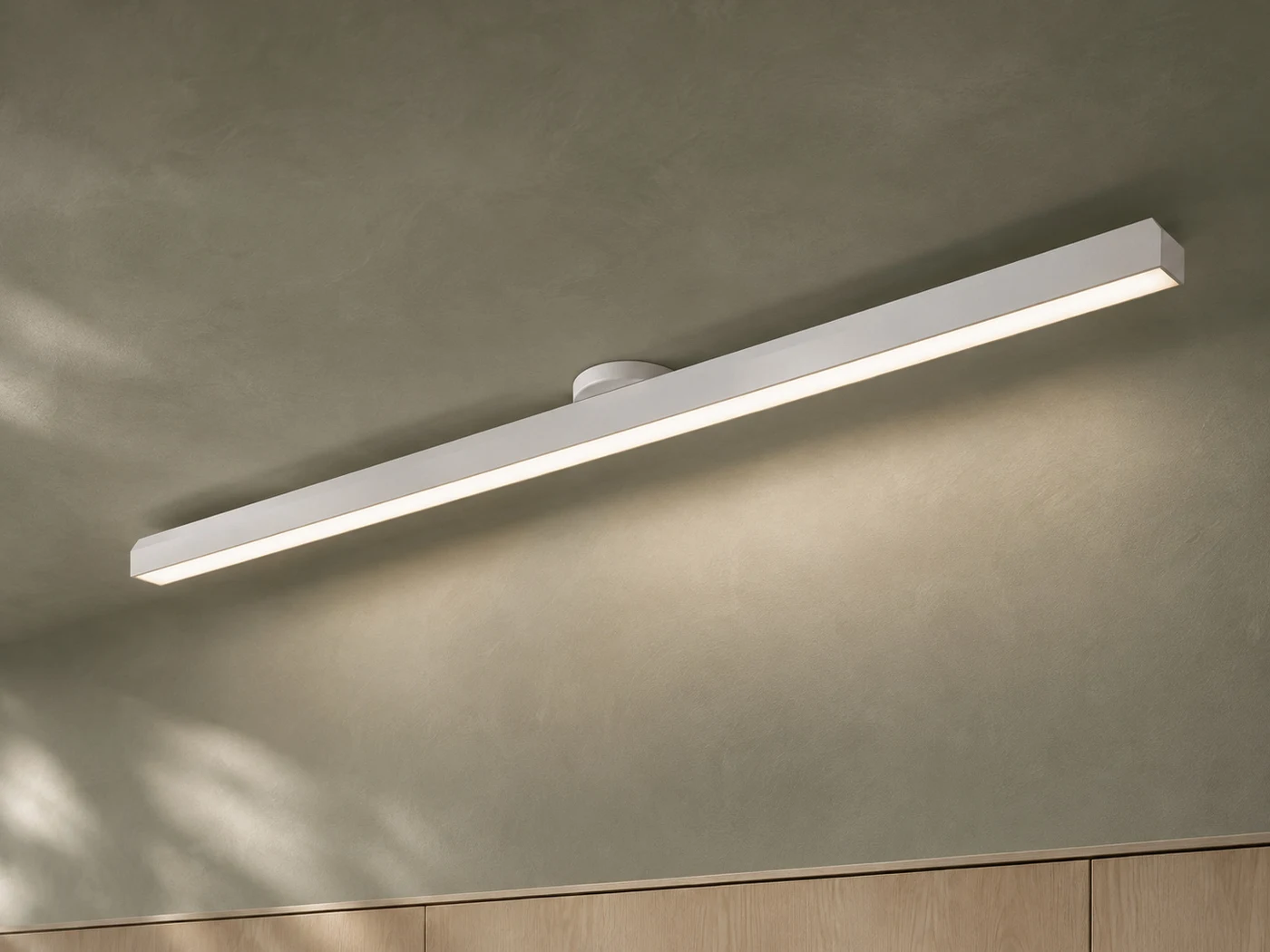
Change lights without an electrical work permit
High ceilings, and any wiring job means downtime and a safety officer on site. And when the production line moves, the lights have to move too.
- Power off, hold it up, done. Barely any downtime
- The L1 linear light, S1 sensor and V1 fan all use the same mount
- No electronics overhead, so anything that fails is in the module
- Pick the type of light after the layout is settled
Impact (estimates)
Replace without throwing away
With a regular LED fixture, one dead driver means the whole fixture goes in the trash. With Magnect you swap only the module, the mount and wiring stay, and we take the old module back. The numbers below are estimates, with the assumptions spelled out. I’ll update them once we weigh the prototypes.
- 13millionLights in Korea moving to LED as fluorescents are phased out from 2028. Ten-year outlook, Korea’s Ministry of Trade, Industry and Energy, 2023.
- 430million USDYearly spend on replacing ceiling lights in Korea. Our own estimate, homes plus public and commercial.
- 1×Electrical jobs on the ceiling. After that, zero wiring on ladders.
- 100%Module take-back target. A return-and-recycle program launches with the product.
Show the per-site formula (for facility staff)
Waste avoided (kg/yr) = replacements per year × [ weight of a scrapped fixture − weight of modules not returned ]
Example: a 1,000-unit complex that replaces 10% a year (100 lights). A typical LED ceiling fixture weighs 1.5–2 kg, so that’s 150–200 kg of scrapped fixtures a year that never happens. Returned modules count as zero; ones that aren’t returned count only their own weight. Disposal costs and the related carbon drop by the same share. We’ll publish the prototype weights and the full basis so they can be used for green procurement scoring and circularity requirements abroad.
Sign up
Be one of the first, before the 2027 launch.
Pilot sites wanted
I’m looking for sites to try it before the 2027 launch.
Any size, from ten units or rooms up. We supply the mounts and lights, and we look at the install and usage data together. Apply and I’ll get back to you myself.
Want one at home? Leave your details here. You’ll hear first when it launches, and how many you need helps me plan the first production run.